Capturing an incident, complaint, or maintenance glitch is only half the battle. When an adverse event occurs, the critical question is not just who reports it, but what happens next.
In health and community service organisations, adverse events can cause operational bottlenecks and administrative drag. Frontline staff are often forced to improvise remediation on the fly, while middle managers may be required to refer to static policy manuals to confirm protocols and deadlines. Meanwhile, senior executives get pulled into the operational weeds of triage, investigation, and manual follow-up.
When event response depends entirely on tacit executive knowledge, two major risks emerge: procedural inconsistency and severe leadership burnout.
1. Frontline & Middle Managers: Actionable Guidance, Not Guesswork
When an event occurs, middle managers need immediate procedural clarity. They do not have time to sift through manuals to find statutory obligations and internal policy deadlines.
With pre-configured Response Protocols, managers simply select the appropriate protocol from a list tailored to that specific event type. Instantly, the system populates the required action steps, detailed instructions, and completion timeframes. Whether managing an NDIS reportable incident, an urgent clinical equipment breakdown, or an open disclosure conversation, managers have an operational roadmap at their fingertips.
2. Senior Leadership: Delegating Execution with Complete Assurance
Executive teams and boards cannot scale if leadership must shepherd every event through its lifecycle.
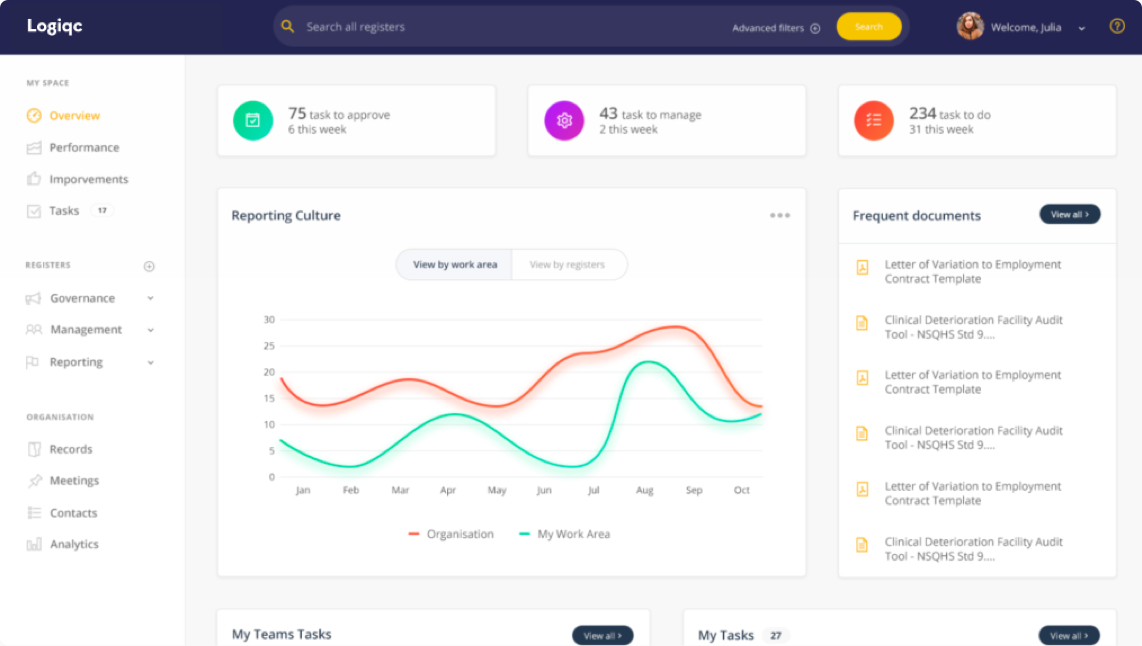
Codifying response procedures into standardised protocols allows executives to safely delegate operational event management to middle management. Built-in guardrails ensure procedural compliance, while real-time dashboard widgets track every open action as due this week, due later, or overdue. Leadership shifts its focus from micro-managing individual events to strategic governance and risk analysis.


.svg)